
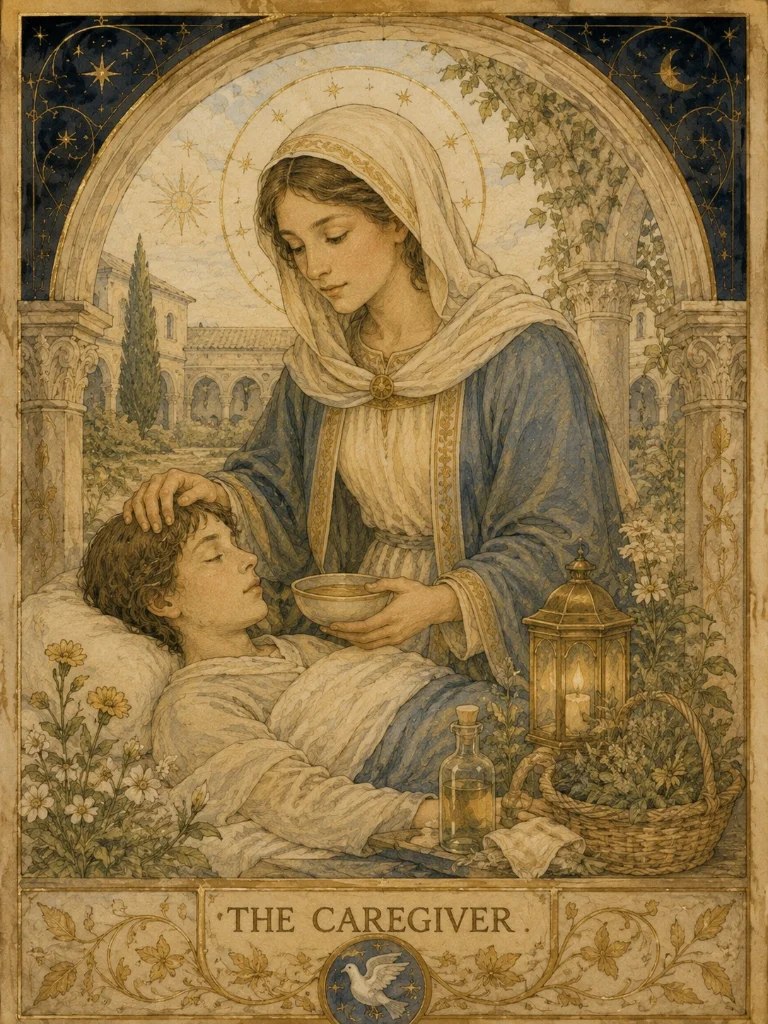
Caregiver
Guided by unconditional generosity, protective care, and selfless nurturing.
What is the Caregiver Archetype? Worldview and Motivation
Our highest human duty is to care for one another and sustain life with compassion.
The Caregiver archetype embodies the maternal and paternal impulses of unconditional love, protection, and nourishment. Sensitive to vulnerability and suffering, the Caregiver instinctively moves toward those in need with open arms and steady comfort.
Fueled by boundless altruism, the Caregiver creates safe havens where individuals can heal, grow, and flourish. They anticipate the needs of others before they are spoken and find supreme fulfillment in shielding life from harm.
In healthy maturity, the Caregiver learns the sacred practice of boundary setting and self-care, realizing that an empty well cannot quench thirst, and that empowering others to grow is the highest form of love.
Core Behavioral Strategy and Action Style
Anticipating needs, offering unconditional support, and providing safety.
Strengths
- Boundless Compassion: Offers restorative comfort and unwavering presence in moments of acute sorrow.
- Anticipatory Nurturing: Identifies subtle distress or practical requirements before a crisis erupts.
Daily Life
- Checking in thoughtfully on friends, family, and colleagues during stress.
- Preparing wholesome food, comforting spaces, and supportive environments.
- Advocating selflessly for the sick, the elderly, children, or animals.
- Listening with patience without rushing to judge or dismiss feelings.
- Holding steady emotional space while others undergo intense transitions.
Relationships
Selfless, deeply nurturing, faithful, and supportive. The warm emotional rock of any partnership.
Work and Creativity
Excels in medicine, nursing, psychotherapy, social work, teaching, non-profit leadership, and hospitality.
Cultural and Mythological Resonance of the Caregiver Archetype
Fictional Examples
Molly Weasley
Harry PotterThe fiercely loving matriarch who opens her home and fiercely defends her family.
Mythological Examples
Demeter / Ceres
The great earth mother goddess of fertility, harvest, and protective maternal love.
Real-World Examples
Florence Nightingale
Founder of modern nursing who transformed sanitation and patient care with tireless devotion.
Astrological Resonances of the Caregiver Archetype
Planetary placements and zodiac signs in your birth chart reveal through which themes this archetype awakens.
Self-Discovery: Transformation Questions for Caregiver
- Am I nurturing others at the expense of my own physical and emotional health?
- Where can I allow others to care for me and receive support gracefully?
- Can I support someone without depriving them of the lessons in their own struggles?
Frequently Asked Questions About Caregiver
What is the core desire and motivation of the Caregiver archetype?
To protect, nurture, and comfort those who are vulnerable or suffering. Behavioral strategy: Anticipating needs, offering unconditional support, and providing safety.
How does the shadow of the Caregiver archetype manifest?
The shadow manifests under excessive distress, loss of autonomy, or repressed emotions.
How can I discover my dominant archetype and shadow?
Discover your primary, auxiliary, and shadow archetypes immediately by taking the 12 Archetypes Personality Test engineered on Carl Jung's analytical psychology model.
Deep Motivations and Fears
Unconscious Drive
Hidden Fear
Awakening of the Shadow
Trigger Patterns
Defensive Behaviors
Signs of Activation
Distortion of Power and Projection
Impact on Spheres of Life
Relationships
Work and Power
Integration and Illumination
Self-Discovery Questions
Cultural Resonance
Fictional Examples
Metodoloji & Kuramsal Temel
Bu içerik; Carl Gustav Jung'un analitik psikoloji kuramı (arketipler, kolektif bilinçdışı ve gölge entegrasyonu), Carol S. Pearson'ın 12 karakter modeli ve Joseph Campbell'ın monomit (Kahramanın Sonsuz Yolculuğu) çerçevesi esas alınarak Arketipya Derinlik Psikolojisi Masası tarafından hazırlanmıştır.
Referans Literatür
- Jung, C. G. (1969). Arketipler ve Kolektif Bilinçdışı (CW 9i). Princeton University Press.
- Pearson, Carol S. (1991). İçimizdeki Kahraman: Yaşadığımız Altı Arketip. HarperCollins.
- Campbell, Joseph (1949). Kahramanın Sonsuz Yolculuğu. Pantheon Books.
- Hillman, James (1983). Arketipsel Psikoloji (Archetypal Psychology). Spring Publications.
Kuramsal Uyarı: Arketipya içerikleri ve analizleri klinik teşhis veya tıbbi psikoterapi yerine geçmez; sembolik farkındalık, felsefi tefekkür ve bireyleşme (individuation) yolculuğu için yorumlayıcı bir rehber niteliğindedir.
Discover Your Dominant Archetype
Analyze your unconscious patterns, primary and secondary archetypes, and relational resonance matrix now.