
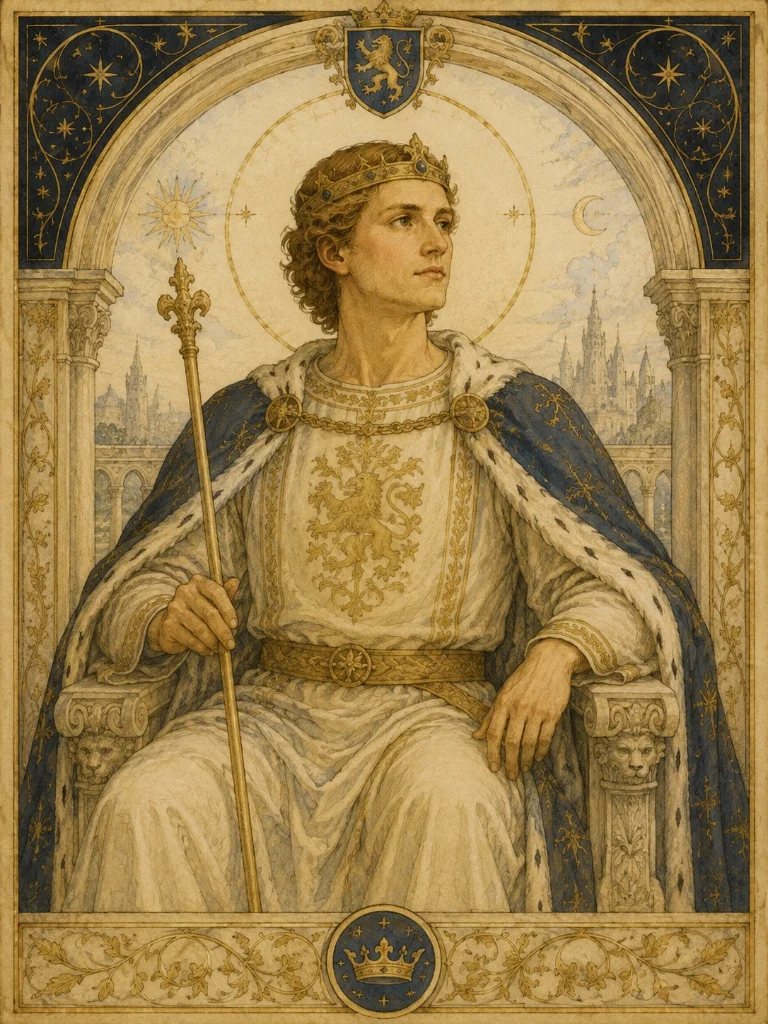
Ruler
Cultivates stability, sovereign order, and thriving communities through leadership.
What is the Ruler Archetype? Worldview and Motivation
Order, sovereignty, and responsibility create the fertile foundation for all human prosperity.
The Ruler (or Sovereign, Emperor, Leader) archetype represents the noble power to bring order out of chaos, organize complex enterprises, and assume final accountability. Motivated by a deep sense of stewardship, the Ruler builds stable realms where people can prosper safely.
Possessing innate authority, strategic foresight, and administrative wisdom, this archetype understands power not as arbitrary dominance, but as the solemn duty to govern justly. They establish clear structures, allocate resources wisely, and resolve conflicts with impartiality.
At their highest integration, Rulers rule with servant leadership and benevolent majesty, transcending control paranoia to mentor future generations and leave behind a flourishing legacy.
Core Behavioral Strategy and Action Style
Exercising leadership, building robust systems, taking responsibility, and maintaining standards.
Strengths
- Architectural Leadership: Builds systems and sustainable structures that endure far beyond individual tenure.
- Sovereign Composure: Inspires confidence and decisive focus during high-pressure crises.
Daily Life
- Making tough, balanced decisions that prioritize long-term organizational health.
- Establishing clear rules, expectations, and fair boundaries within teams and families.
- Anticipating systemic vulnerabilities and establishing resilient contingency plans.
- Delegating tasks effectively and mentoring upcoming leaders with authoritative guidance.
- Remaining steady and composed when surrounding environments succumb to panic.
Relationships
Supportive, protective, generous, and steady. Expects respect, loyalty, and honest accountability.
Work and Creativity
Excels in executive management, civic administration, corporate strategy, law, governance, and fund management.
Cultural and Mythological Resonance of the Ruler Archetype
Fictional Examples
Mufasa
The Lion KingThe wise sovereign who respects the Great Circle of Life and governs with balanced strength.
Mythological Examples
Real-World Examples
Marcus Aurelius
Roman Emperor and Stoic philosopher who viewed sovereign power as humble duty to mankind.
Astrological Resonances of the Ruler Archetype
Planetary placements and zodiac signs in your birth chart reveal through which themes this archetype awakens.
Self-Discovery: Transformation Questions for Ruler
- Am I leading through inspiration and service, or trying to micromanage out of fear?
- Where can I surrender control and trust others with genuine responsibility?
- How can my leadership create a safer, more prosperous space for those I protect?
Frequently Asked Questions About Ruler
What is the core desire and motivation of the Ruler archetype?
To establish order, prosperity, stability, and enduring security for the community. Behavioral strategy: Exercising leadership, building robust systems, taking responsibility, and maintaining standards.
How does the shadow of the Ruler archetype manifest?
The shadow manifests under excessive distress, loss of autonomy, or repressed emotions.
How can I discover my dominant archetype and shadow?
Discover your primary, auxiliary, and shadow archetypes immediately by taking the 12 Archetypes Personality Test engineered on Carl Jung's analytical psychology model.
Deep Motivations and Fears
Unconscious Drive
Hidden Fear
Awakening of the Shadow
Trigger Patterns
Defensive Behaviors
Signs of Activation
Distortion of Power and Projection
Impact on Spheres of Life
Relationships
Work and Power
Integration and Illumination
Self-Discovery Questions
Cultural Resonance
Fictional Examples
Metodoloji & Kuramsal Temel
Bu içerik; Carl Gustav Jung'un analitik psikoloji kuramı (arketipler, kolektif bilinçdışı ve gölge entegrasyonu), Carol S. Pearson'ın 12 karakter modeli ve Joseph Campbell'ın monomit (Kahramanın Sonsuz Yolculuğu) çerçevesi esas alınarak Arketipya Derinlik Psikolojisi Masası tarafından hazırlanmıştır.
Referans Literatür
- Jung, C. G. (1969). Arketipler ve Kolektif Bilinçdışı (CW 9i). Princeton University Press.
- Pearson, Carol S. (1991). İçimizdeki Kahraman: Yaşadığımız Altı Arketip. HarperCollins.
- Campbell, Joseph (1949). Kahramanın Sonsuz Yolculuğu. Pantheon Books.
- Hillman, James (1983). Arketipsel Psikoloji (Archetypal Psychology). Spring Publications.
Kuramsal Uyarı: Arketipya içerikleri ve analizleri klinik teşhis veya tıbbi psikoterapi yerine geçmez; sembolik farkındalık, felsefi tefekkür ve bireyleşme (individuation) yolculuğu için yorumlayıcı bir rehber niteliğindedir.
Discover Your Dominant Archetype
Analyze your unconscious patterns, primary and secondary archetypes, and relational resonance matrix now.