
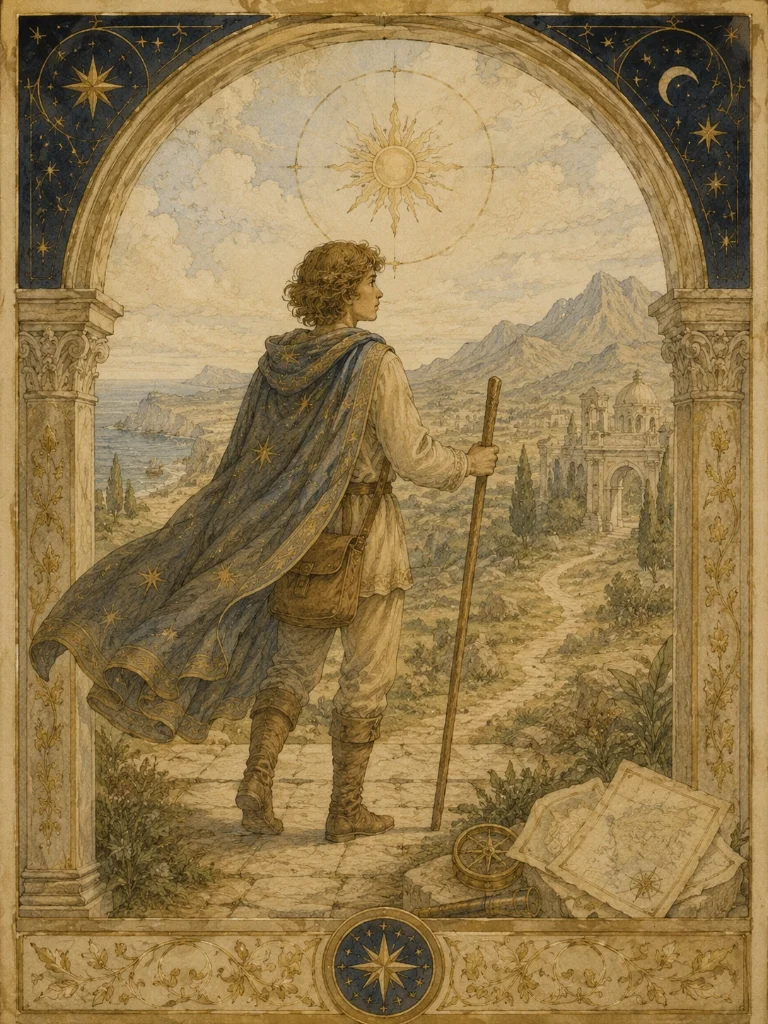
Explorer
Driven by freedom, self-discovery, and the thrill of uncharted horizons.
What is the Explorer Archetype? Worldview and Motivation
The world is a boundless realm of wonder and self-discovery waiting beyond the horizon.
The Explorer archetype embodies the timeless quest for autonomy, authentic individuality, and untouched frontier. Disdaining monotony and stagnant routine, the Explorer feels most alive when crossing thresholds into the unknown.
For the Explorer, journeying outward into wild landscapes or unmapped ideas is simultaneously an inward pilgrimage toward the true Self. They value independence above social approval and refuse to cage their spirit within rigid societal conventions.
A matured Explorer realizes that the ultimate frontier is not geographical, but psychological—discovering peace within the present moment while remaining ever open to the wonders of existence.
Core Behavioral Strategy and Action Style
Venturing into novel territories, seeking authentic experience, and safeguarding autonomy.
Strengths
- Authentic Independence: Courageously lives according to internal truth rather than external expectations.
- Adaptive Resourcefulness: Navigates unfamiliar territory and sudden changes with natural grace.
- Visionary Curiosity: Discovers untapped possibilities long before they enter the mainstream.
Daily Life
- Seeking unconventional paths and fresh viewpoints in everyday routines.
- Spontaneously embarking on journeys, treks, or experimental projects.
- Resisting rigid bureaucratic constraints in favor of adaptable agility.
- Collecting vivid memories, cultural encounters, and expansive perspectives.
- Valuing personal space, self-direction, and natural sanctuaries.
Relationships
Requires ample room for personal freedom. Deeply treasures relationships with partners who share a thirst for discovery and understand the need for occasional solitude.
Work and Creativity
Flourishes in remote work, travel, experimental research, exploratory design, journalism, and autonomous creative roles.
Cultural and Mythological Resonance of the Explorer Archetype
Fictional Examples
Indiana Jones
Indiana JonesThe quintessential explorer archeologist seeking relics across uncharted ruins.
Mythological Examples
Odysseus
The epic wanderer whose voyages across mythical seas forged deep psychological wisdom.
Real-World Examples
Ibn Battuta
Traveled over 73,000 miles across the medieval world documenting diverse civilizations.
Astrological Resonances of the Explorer Archetype
Planetary placements and zodiac signs in your birth chart reveal through which themes this archetype awakens.
Self-Discovery: Transformation Questions for Explorer
- Am I running toward a genuine truth or running away from something I fear facing?
- How can I find grounding and root myself without feeling trapped?
- What threshold am I being called to cross next?
Frequently Asked Questions About Explorer
What is the core desire and motivation of the Explorer archetype?
To experience authentic autonomy, explore the world, and discover who they truly are. Behavioral strategy: Venturing into novel territories, seeking authentic experience, and safeguarding autonomy.
How does the shadow of the Explorer archetype manifest?
The shadow manifests under excessive distress, loss of autonomy, or repressed emotions.
How can I discover my dominant archetype and shadow?
Discover your primary, auxiliary, and shadow archetypes immediately by taking the 12 Archetypes Personality Test engineered on Carl Jung's analytical psychology model.
Deep Motivations and Fears
Unconscious Drive
Hidden Fear
Awakening of the Shadow
Trigger Patterns
Defensive Behaviors
Signs of Activation
Distortion of Power and Projection
Impact on Spheres of Life
Relationships
Work and Power
Integration and Illumination
Self-Discovery Questions
Cultural Resonance
Fictional Examples
Metodoloji & Kuramsal Temel
Bu içerik; Carl Gustav Jung'un analitik psikoloji kuramı (arketipler, kolektif bilinçdışı ve gölge entegrasyonu), Carol S. Pearson'ın 12 karakter modeli ve Joseph Campbell'ın monomit (Kahramanın Sonsuz Yolculuğu) çerçevesi esas alınarak Arketipya Derinlik Psikolojisi Masası tarafından hazırlanmıştır.
Referans Literatür
- Jung, C. G. (1969). Arketipler ve Kolektif Bilinçdışı (CW 9i). Princeton University Press.
- Pearson, Carol S. (1991). İçimizdeki Kahraman: Yaşadığımız Altı Arketip. HarperCollins.
- Campbell, Joseph (1949). Kahramanın Sonsuz Yolculuğu. Pantheon Books.
- Hillman, James (1983). Arketipsel Psikoloji (Archetypal Psychology). Spring Publications.
Kuramsal Uyarı: Arketipya içerikleri ve analizleri klinik teşhis veya tıbbi psikoterapi yerine geçmez; sembolik farkındalık, felsefi tefekkür ve bireyleşme (individuation) yolculuğu için yorumlayıcı bir rehber niteliğindedir.
Discover Your Dominant Archetype
Analyze your unconscious patterns, primary and secondary archetypes, and relational resonance matrix now.