
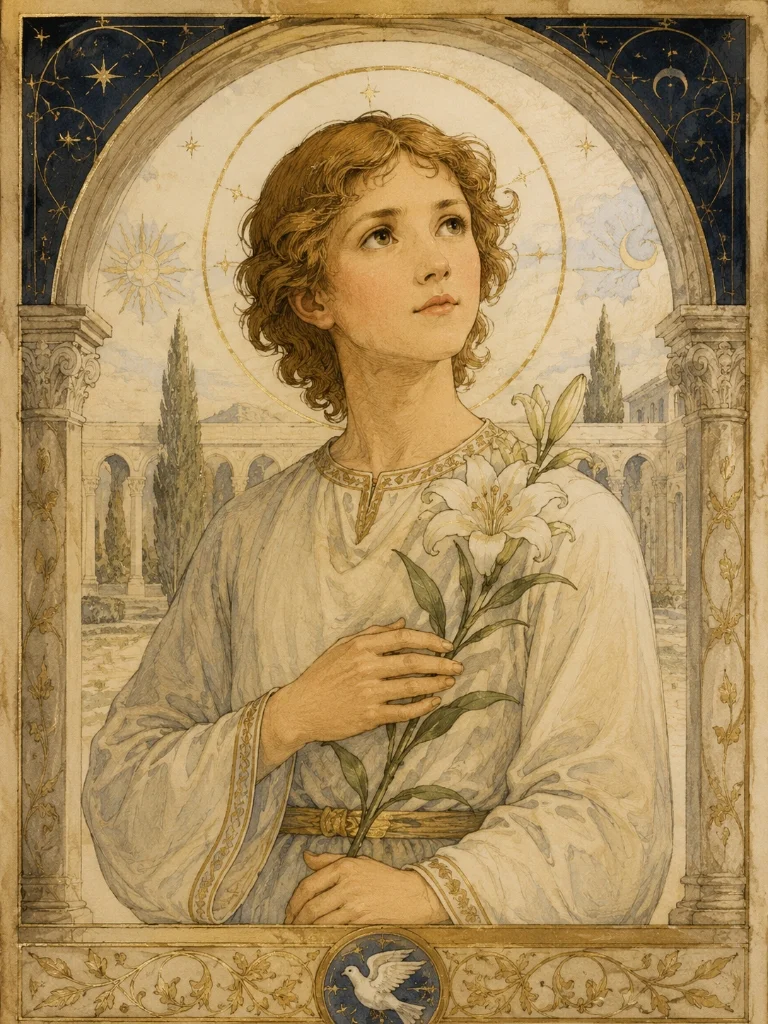
Innocent
Approaches life with pure hope, trusting in goodness, safety, and renewal.
What is the Innocent Archetype? Worldview and Motivation
Life is intrinsically sacred, and harmony can always be restored through purity of heart.
The Innocent archetype represents the pure, untainted core of the human psyche—the innate faith that life is fundamentally benevolent and that peace is attainable. Radiating sincerity, optimism, and goodwill, the Innocent inspires others to believe in renewal.
While cynics may mistake the Innocent's trust for naivety, at its highest expression it is a conscious, courageous choice: refusing to let the bitterness of the world extinguish the flame of hope. The Innocent seeks simple, harmonious living aligned with wholesome values.
Through mature integration, the Innocent learns to acknowledge the existence of darkness without letting it corrupt their luminous essence, achieving the holy simplicity of the integrated Self.
Core Behavioral Strategy and Action Style
Living authentically, cultivating optimism, and trusting in the inherent good of people.
Strengths
- Luminous Optimism: Renews faith and hope in weary teams during difficult periods.
- Incorruptible Sincerity: Acts without hidden agendas, creating profound emotional safety.
Daily Life
- Finding genuine delight in the simple, quiet blessings of each day.
- Extending goodwill and unconditional trust to strangers and colleagues.
- Choosing constructive interpretations rather than indulging cynicism.
- Nurturing peaceful environments where conflict is resolved gently.
- Remaining devoted to ethical purity and heartfelt sincerity.
Relationships
Gentle, affectionate, and steadfast. Flourishes in safe, honest partnerships where vulnerability is cherished.
Work and Creativity
Excels in wellness, counseling, community building, spiritual guidance, and wholesome design.
Cultural and Mythological Resonance of the Innocent Archetype
Fictional Examples
Frodo Baggins
The Lord of the RingsCarries the ultimate burden of darkness with an enduring innocence of heart.
Mythological Examples
Baldur (Norse Mythology)
The radiant god of light, peace, beauty, and renewal.
Real-World Examples
Fred Rogers (Mister Rogers)
Dedicated his life to unconditional kindness, emotional validation, and childlike purity.
Astrological Resonances of the Innocent Archetype
Planetary placements and zodiac signs in your birth chart reveal through which themes this archetype awakens.
Self-Discovery: Transformation Questions for Innocent
- Where am I denying reality in order to maintain a superficial feeling of peace?
- How can I accept life's shadow while preserving my innate optimism?
- Can I stand strong in my values without needing external validation?
Frequently Asked Questions About Innocent
What is the core desire and motivation of the Innocent archetype?
To experience peace, paradise, happiness, and moral alignment. Behavioral strategy: Living authentically, cultivating optimism, and trusting in the inherent good of people.
How does the shadow of the Innocent archetype manifest?
The shadow manifests under excessive distress, loss of autonomy, or repressed emotions.
How can I discover my dominant archetype and shadow?
Discover your primary, auxiliary, and shadow archetypes immediately by taking the 12 Archetypes Personality Test engineered on Carl Jung's analytical psychology model.
Deep Motivations and Fears
Unconscious Drive
Hidden Fear
Awakening of the Shadow
Trigger Patterns
Defensive Behaviors
Signs of Activation
Distortion of Power and Projection
Impact on Spheres of Life
Relationships
Work and Power
Integration and Illumination
Self-Discovery Questions
Cultural Resonance
Fictional Examples
Metodoloji & Kuramsal Temel
Bu içerik; Carl Gustav Jung'un analitik psikoloji kuramı (arketipler, kolektif bilinçdışı ve gölge entegrasyonu), Carol S. Pearson'ın 12 karakter modeli ve Joseph Campbell'ın monomit (Kahramanın Sonsuz Yolculuğu) çerçevesi esas alınarak Arketipya Derinlik Psikolojisi Masası tarafından hazırlanmıştır.
Referans Literatür
- Jung, C. G. (1969). Arketipler ve Kolektif Bilinçdışı (CW 9i). Princeton University Press.
- Pearson, Carol S. (1991). İçimizdeki Kahraman: Yaşadığımız Altı Arketip. HarperCollins.
- Campbell, Joseph (1949). Kahramanın Sonsuz Yolculuğu. Pantheon Books.
- Hillman, James (1983). Arketipsel Psikoloji (Archetypal Psychology). Spring Publications.
Kuramsal Uyarı: Arketipya içerikleri ve analizleri klinik teşhis veya tıbbi psikoterapi yerine geçmez; sembolik farkındalık, felsefi tefekkür ve bireyleşme (individuation) yolculuğu için yorumlayıcı bir rehber niteliğindedir.
Discover Your Dominant Archetype
Analyze your unconscious patterns, primary and secondary archetypes, and relational resonance matrix now.